



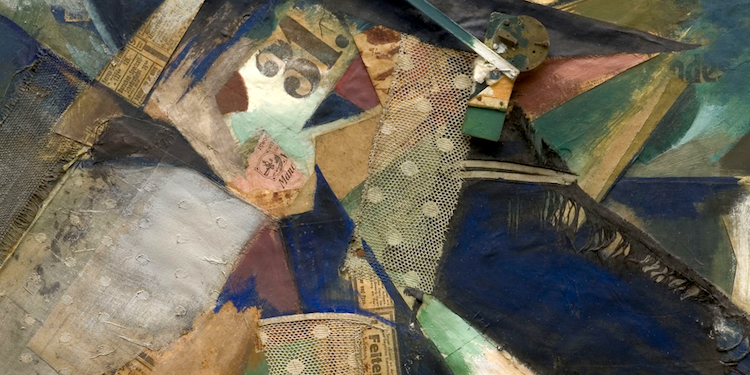

The question that forms the title of PIPOL 13, To Say It All?, elicits an almost immediate and reassuring answer: to consider it impossible. Indeed, Lacan hammered home that truth can only be half-said, that words are lacking to say the other half, and that one cannot make the unspeakable speak. As always, he did not stop there, since his late teaching seemed to reshuffle the deck by emphasizing the importance of contingency, the unforeseen, and the accidental to the detriment of determination. Has the unsayable been dismissed, crossed ?Let us say rather that the two go together. Like the polar bear and the whale, men and women are not made to meet, but frequently fall in love with one another. It is therefore because it is not written in the stars that love strikes, which demonstrates that this little god is married only to chance. This is no doubt why he resembles us so much, unless it is the other way around, but that is another story. In short, chance stings us, so much so that no one is made to meet anyone…
Every Word Is an Encounter
The marriage between psychoanalysis and contingency is dazzlingly manifest in the relationship between the signifier and meaning. No law holds there other than that of the arbitrary, since meaning does not result from any prior necessity, but only from the multiple and incessant encounters of signifiers with one another. Signifying contingency was as much exploited as illustrated by the Surrealists, notably André Breton and Michel Leiris, who showed through a wild practice of wordplay that meaning did not solely come from etymology. Let us note the difference between witticism and wordplay: the former entails an intention of signification, shakes up received meanings only to install new ones, presupposes a language in order, and a compact Other whose law is that of metaphor and metonymy; the latter targets language beyond meaning, namely lalangue where words no longer signify anything precise, its law is equivocation, and homophony, when complemented by sound, opens up to an unbridled plurality of meaning.[1]
Words Make Love
André Breton wants his words to be “without wrinkles” because they aim at a renovation of the lexicon by freeing themselves from etymology, which is history, even tradition. In a short text, “Words without Wrinkles,”[2] he contrasts the word’s duty to signify with its concrete existence, its sonority, its architectural character—“Words tempt the paintbrush”—all features that no longer evoke what is understood, but what is experienced through the voice, or through sight, like Mallarmé’s A Roll of the Dice or Apollinaire’s Calligrammes. Words have a life of their own, command thought, and are therefore “energy creators.” The conclusion deserves to be quoted at length: “And let it be well understood that we say: plays on words, when it is our surest reasons for being that are in play. Words, moreover, have finished playing. Words make love.”
Words make love—we are simultaneously in meaning and outside-meaning, or joui-sens: sense because it is words that tell us what love is, and give shape to our feelings; joui-sens when words rub against each other in a continuous murmur that doubles our existence.
The Rules of the Game
Leiris made it his life’s work in his Rules of the Game, begun during the Occupation and finished thirty-five years later. He also gave an echo of it in the form of a dictionary in his “Glossary: My Glosses’ Ossuary.”[3] This glossary is included in a collection entitled Mots sans mémoire [Words Without Memory], that is to say without history, without etymology, words that therefore do not show their age. The title already states what it is about, namely a dictionary in which definitions arise from a practice of assonance where writing and voice are knotted together.
He would later give it a supplement, Langage Tangage ou ce que les mots me dissent [Language Pitching, or What Words Tell Me], where Breton’s wrinkles become desire—“desire, ‘wrinkles inverted?”[4]
In these two volumes we find numerous gems situating their stake in jouissance while revealing how invaluable the passage through lalangue can prove to be in gaining knowledge: “Amour – armure” [Love – armor] (which is not without evoking Lacan’s amur); “Calcul – cale-cul” [Calculation – ass-wedge]; “Délire –délié, il aide à lire l’idée” [Delirium – untied, it helps to read the idea]; “Hasard – bazar bizarre” [Chance – bizarre bazaar]; “Jouissance – jusqu’où (en jouant) se hissent mes sens ?” [Jouissance – how far (while playing) do my senses hoist themselves?]; “Malheur – mâle heurt?” [Misfortune – male clash?]; “National – passionnément anal” [National – passionately anal]; “Nécessité – la cécité innée” [Necessity – innate blindness][5]; “Charme – chère rme…”, [Charm – dear arm]; “Cauchemar = cache-mort” [Nightmare = death-hider]; “Dieu hideux” [Hideous God]; “Eros, héros” [Eros, hero].[6]
The unforeseen being for Leiris the master of language, he scarcely prized the qualifier unsayable, which he found a bit “tremulous,” sentimental for suggesting “a marvelous impossibility” faced with “a beyond of all possibilities”—that is, something that one would be powerless to grasp rather than a true impossible; in short, a predictable windbag, he noted further. He did not, for all that, promote a saying-it-all, since “a boundary set by taste or by a deficiency of expression” constituted a stopping point. Taste or deficiency of expression: two terms he did not develop, but which evoke, at least for the latter, a real limit.[7]
Leiris said he had maintained a romance with words since childhood, and found it more interesting to let them think in his place—“let them dictate to me rather than be dictated by me.”[8] What he called his literary line was not to introduce spoken language into writing like Queneau, but “in a resolutely subjective mode, to vivify the written word in a way by its timbre, in other words to make it obvious that these pages our eyes read are underpinned by a voice” – a voice that is usually
aphonic except by the grace of the writer, the musician, or the psychotic. If they sometimes break through the wall of the unsayable, it is always without knowing it, by accident: felix culpa.
[1] Cf. Miller, J.-A., La fuite du sens, 1995-1996, L’orientation lacanienne (annual course delivered within the
framework of the Department of Psychoanalysis, The University of Paris 8), unpublished, lessons of 6, 13, and 20
December 1995.
[2] Breton, A., “Words without Wrinkles,” The Lost Steps, trans. Mark Polizzotti (Lincoln: University of Nebraska
Press, 1996), 100-102.
[3] Leiris, M., “Glossary: My Glosses’ Ossuary,” Brisées: Broken Branches, trans. Linda Davis (San Fransisco: North
Point Press, 1989) 3 and 61.
[4] Leiris, M., “Souple mantique ou simple tic de glotte,” Langage Tangage ou ce que les mots me disent (Paris:
Gallimard, 1985), 22.
[5] Leiris, M., “Glossary: My Glosses’ Ossuary,” op. cit.
[6] Leiris, M., “Souple mantique ou simple tic de glotte,” op. cit.
[7] Leiris, M., “Musique en texte et musique antitexte,” Langage Tangage ou ce que les mots me disent, op. cit., p. 84.
[8] Ibid., p. 110.
Kurt Schwitters, Merzbild 31, 1920
